


Our Essential Oils of plants from Provence
It took three generations of farmers for Alain to decide to offer his fertile land other horizons with more aromatic scents. A new chapter which announces beautiful surprises.
It is in an instinctive nature and far from all superficial preoccupations, that the family exploitation Arom’ Alpilles is finally revealed. Thyme, rosemary, lavandin and immortelle are carefully extracted from their territory to release their essences with abundant virtues. In “Slow Cosmetics”, soft medicinal remedy or brilliant culinary pleasure, the essential oil became queen.
Between the Crau plain and the Alpilles mountains, the Mas des Fleurs in Maussane-les-Alpilles is a land of simplicity that works in harmony with Mother Nature. Victim of its freshness, the farm is in the process of obtaining organic certification, giving it the right to proudly display the AB label on its creations.
Make way for your creativity !
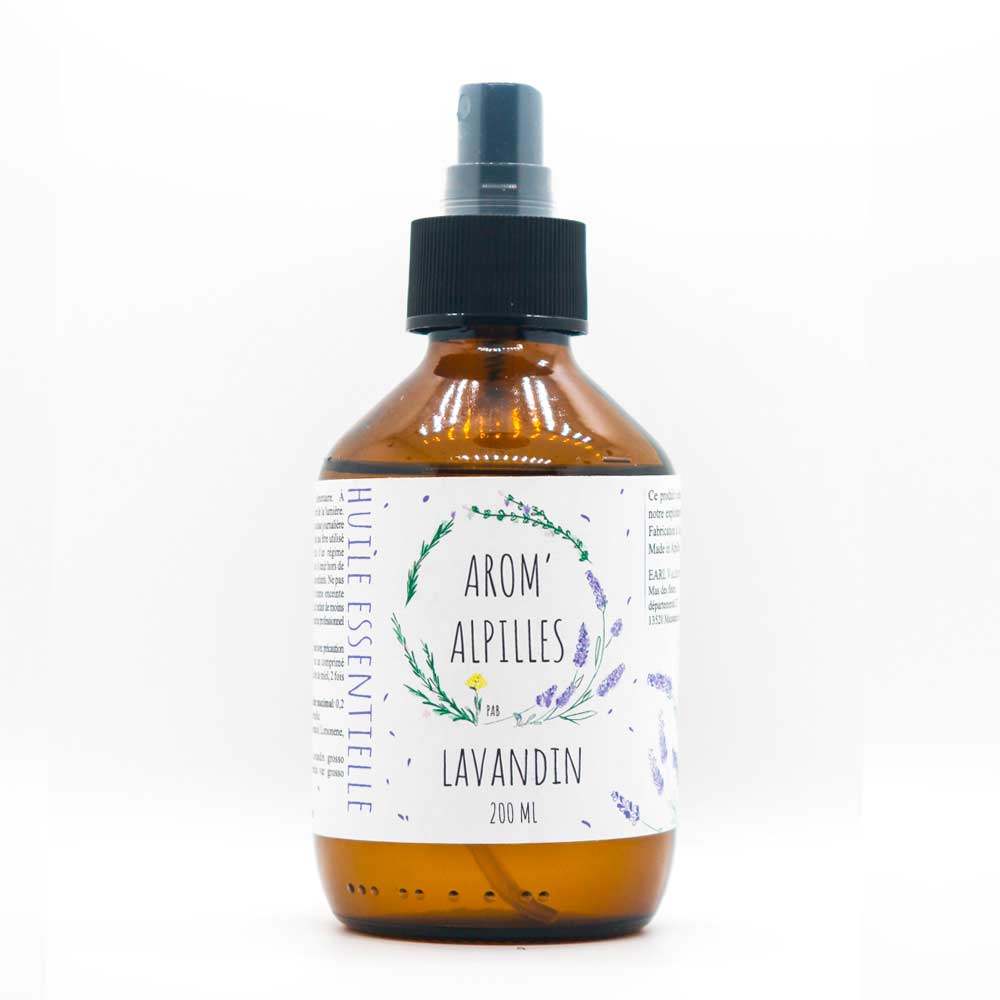
Essential Oil of Lavandin Grosso
Calming, relaxing & restorative
Lavender grown in Provence
Producer in conversion to organic
 Oils made and packaged in France
15,99 € for 200ml
Immortelle Essential Oil
Healing, Invigorating & Toning
Immortelle grown in Provence
Producer in conversion to organic
Oils made and packaged in France
24,99 € per 5ml

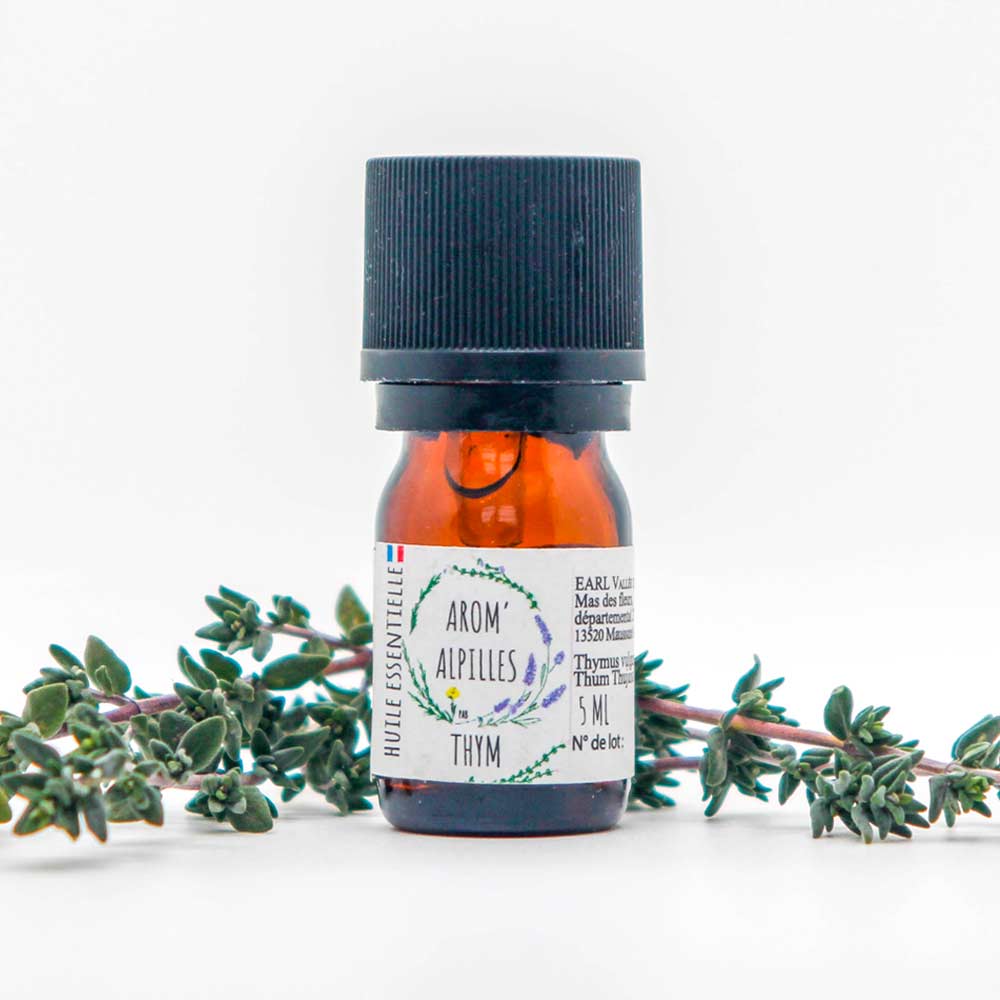
Thyme Essential Oil
Sanitizing, Regenerating & Warming
Thyme grown in Provence
Producer in conversion to organic
Oils made and packaged in France
9,99 € per 5ml
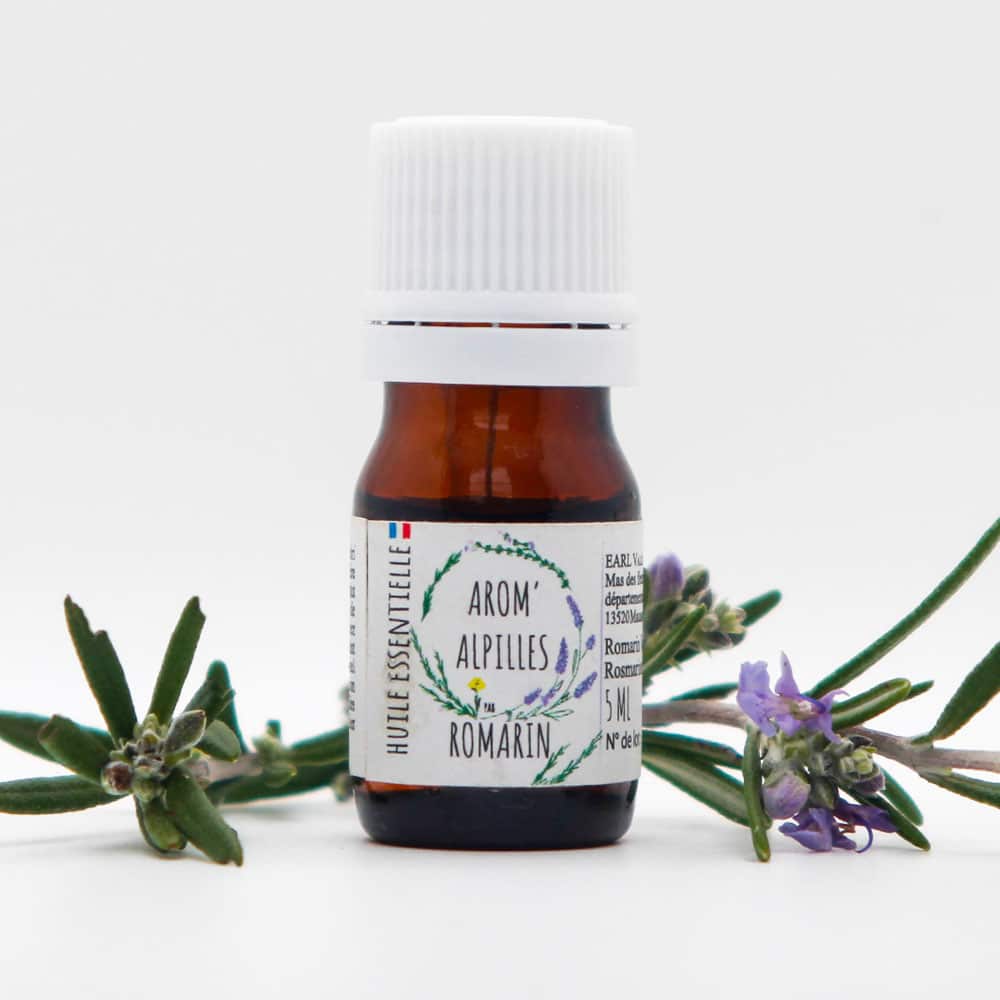
Rosemary Essential Oil
Purifying, Stimulating & Detoxifying
Rosemary grown in Provence
Producer in conversion to organic
Oils made and packaged in France
5,99 € per 5ml
Essential Oil of Lavandin Grosso
Calming, relaxing & restorative
Lavender grown in Provence
Producer in conversion to organic
Oils made and packaged in France
15,99 € for 200ml
Immortelle Essential Oil
Healing, Invigorating & Toning
Immortelle grown in Provence
Producer in conversion to organic
Oils made and packaged in France
24,99 € per 5ml
Thyme Essential Oil
Sanitizing, Regenerating & Warming
Thyme grown in Provence
Producer in conversion to organic
Oils made and packaged in France
9,99 € per 5ml
Rosemary Essential Oil
Purifying, Stimulating & Detoxifying
Rosemary grown in Provence
Producer in conversion to organic
Oils made and packaged in France
5,99 € per 5ml
Our guide to everything about essential oils
What is an essential oil and how to identify it?
An essential oil, not to be confused with a fatty vegetable oil, is a volatile active concentrate of plants extracted in their purest and most natural form. It is common to speak of the quintessence of the plant, which includes flowers, petals, roots, wood, bark, etc.
The aromatic molecules that make up essential oils are indicated by the chemotype, an identity card that allows us to recognize the therapeutic properties of each of them. In particular the risk of toxicity for pregnant women.
How are the active ingredients extracted for the production of essential oils?
First of all, it is necessary to remember that there can be no quality essential oil without the extraction process being perfectly carried out. Otherwise, the biochemical composition of the essential oil may be altered. In addition, the choice of the still ( device that is used to distill it), the pressure level, the duration, the water and the storage.
- Steam distillation is the most common method for making essential oil because of its gentleness and efficiency. The steam, under the impulse of a low pressure, crosses the aromatic plants present in the still to release, after condensation, the essential oil.
- Water distillation is used in particular to preserve heat-sensitive essential oils. The method consists of immersing the plant material in water present in the still and then heating it until it boils. As the condensed substance cools, the water and the essential oil separate. This is a process that allows the commercialization of floral water, also called hydrosol or hydrolat.
-
Hydrodistillation, hydrodiffusion or percolation are the result of an extraction obtained by introducing steam from the top to allow the grid at the bottom to retain the plant material. This method offers a better quality of aromatic substances but a much more limited yield, which justifies higher prices.
How to use an essential oil and for what purpose?
Long put aside, especially during the industrial revolution, the essential oil returns with resolution on the front of the scene. A spotlight that is naturally worth an interrogation and careful advice for use to avoid the downside of fame.
Naturally beneficial for health and general well-being, essential oil can quickly change character and turn into a formidable threat. It is therefore important to emphasize that natural does not mean harmless and that no one becomes a therapist like that. And this, even after a good reading of our notes. The essential oil is therefore to be consumed with caution and respect for the prescribed doses.
Whether they are sprayed by a diffuser, delicately absorbed by the skin, mixed with cosmetic products or deliciously dissolved in culinary preparations, essential oils are used in a unique way called aromatherapy.
Here is a summary of the various possible modes of use according to the needs and properties of each essential oil:
- Oral use
- Skin application and massage
- Cosmetic active ingredient (face care, body care or hair care)
- Aromatic bath
- Diffusion (diffuser or mister)
Use of essential oils to make your own beauty products
Using essential oils for face and body care
Who has never dreamed of making their own beauty products? An anti-aging cream, a slimming treatment, a purifying mask, a healing balm? The choice is endless and on top of that it is completely natural and responsible. It’s up to you!
All you have to do is add the right amount of essential oil to your different emulsions, shower gel, balm…etc. Ideally, the incorporation of the essence must be done cold to allow him to preserve all its properties
It is recommended to apply the following doses:
- Up to 1% of essential oil for face care
- Up to 2% of essential oil for body care
Varieties of essential oils to use for face and body care:
- Italian Helichrysum: anti-aging & healing
- Tea Tree: purifying (ideal for imperfections)
- Grapefruit: firming & decongesting
Same question. Is there a miracle solution to prevent hair loss or even stimulate hair growth without having to pay for a flight to an exotic country and surgery?
Using essential oils for hair care
It is recommended to apply the following dose: up to 2% of essential oil for hair care.
Varieties of essential oils to use for hair care :
- Bay Saint Thomas: to stimulate bulb regrowth
- The Cedar of the Atlas: to limit the appearance of dandruff
- Clary Sage: regulate oily scalps
Using essential oils in perfumery
To make your own perfume is to express a personality even though our consumption modes push us to a certain homogenization. Detach yourself from the photo, express yourself with your own olfactory creations. To create a perfume it is necessary to determine an olfactory pyramid which will determine the order of arrival of the scents to our nose.
- The top note is the first to arrive, it stays on the skin for a few hours. It is the intuition
- The heart note is more timid and reveals itself only after the evaporation of the top note. It is love at first sight
- The base note is the representation of the first two, it is their common base which fixes the top notes and the heart notes between them. It is love
The scents are then classified into different olfactory families to find different combinations and remember them more easily.
Hesperides, Floral, Ferns, Cyprus, Woody, Amber, Leather
It is recommended to apply the following dose:
- Between 15 and 40% of essential oils incorporated in alcohol or a neutral oil such as Jojoba
Use of essential oils in the field of health and well-being
For specific needs in terms of health and well-being, skin application and massage are considered the most suitable and beneficial solutions. That said, it is also possible to absorb essential oils orally, dilute them in a steam bath or diffuse them, all of which are equally beneficial to our bodies.
The massage is a moment of relaxation which favors a good blood circulation and a harmonious diffusion of essential oils. Whether it is localized or generalized to the whole body, the massage must always respect a healthy dosage to avoid any discomfort. For that, it is advisable beforehand to dilute essential oils with vegetable oil, vegetable butter or a vegetable cream.
It is advised to apply the following dose:
- Between 2% and 5% of essential oil in a massage oil
- Between 10% and 50% of essential oil in an oily mixture
You will note that it is recommended to be aware of the power of the properties of certain essential oils in order to regulate the dose downwards.
Varieties of essential oils to use :
- True Lavender: relax & calm
- Ravintsara: to reinforce the immune system
- Gaultheria: fight against joint and muscle pain
Oral use is possible but not for everyone and not in any way. Reserved for people over 7 years old, the absorption solution generally requires the advice of a doctor or a pharmacist.
It is recommended to apply the following dose:
- 1 to 2 drops of essential oil for a spoonful of honey or vegetable oil
- 1 drop of essential oil for 4 drops of dispersant
Varieties of essential oils to use:
- Carrot: simulates the liver
- Lemon : improves intestinal transit and digestion
- The Lédon : detoxifies
The olfactory pathway directly concerns our nerve cells. It is thus a particularly fast mode of application which stimulates our moods and our immune defenses. Which diffuser to choose? There is no classification concerning the different types of diffusers present on the market. However, it is advisable to regulate the emissions in time in order to respect the quantity of absorption of our cells. It is thus quite possible to use a simple mister or a room spray to allow essential oils to express themselves in your environment.
You think you have a cold and you spent your night looking for a solution to alleviate the discomfort? Finally it is not a simple cold but a beautiful sinusitis? In this case, you may be advised to use inhalation. For this, a pan of boiling water, a few drops (± 5) of essential oils and a towel are enough.
Ideally, we advise you to perform the inhalation between 5 and 10 minutes just before bedtime. This will allow you to spend a quieter night and to recover the hours lost from the previous one.
Varieties of essential oils to use:
- Rosemary Verbenone: Respiratory decongestant
- Peppermint : Eliminates bad smells
- Mandarin : Relaxing
Using essential oils in cooking
Incorporated hot or cold, essential oils can boast of adding a delicious imprint to your dishes, desserts and other oils. Generally speaking and due to their high concentration, there is no need to be heavy handed, on the contrary, it could make your preparations sickening.
Varieties of essential oils to use in cooking :
- Appetizer: Tomato Gaspacho flavored with linalool basil essential oil
- Main course : Blanquette of salmon with fennel and lime essential oils
- Dessert: Chocolate mousse with spearmint essential oil
In short, whether used in cosmetics or as a mild medicinal remedy to treat certain pathologies, whether applied to the skin or through the respiratory tract, essential oil is precious and requires some precautions. That being said, now you can only unleash the artist in you.